

Tile efficiency
BeginnerPrioritise multi-sided waits
Favour shapes that complete from multiple draws. A two-sided sequence (4-5 waiting on 3 or 6) can be finished by up to 8 tiles; an edge wait (1-2 waiting on 3) by at most 4. With five sets to build and a minimum to clear, the wide shape is worth even more here than in the no-floor Classic game — a fast but shapeless hand can arrive under the floor and be worth almost nothing.
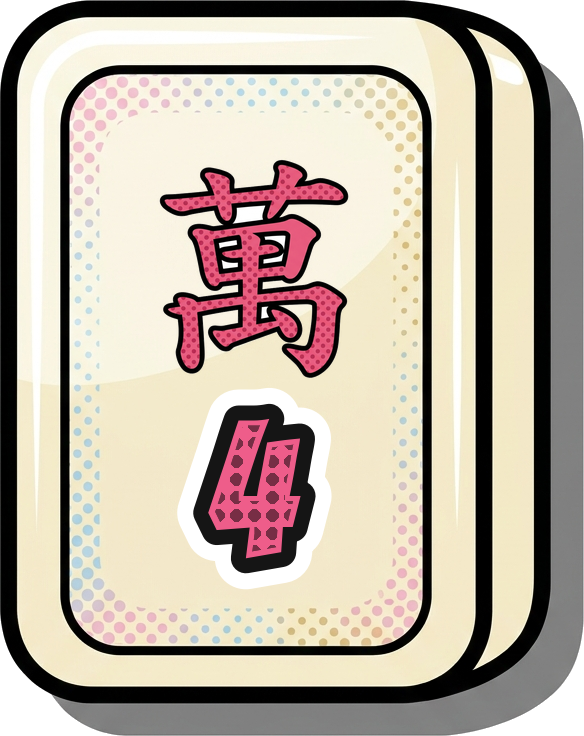
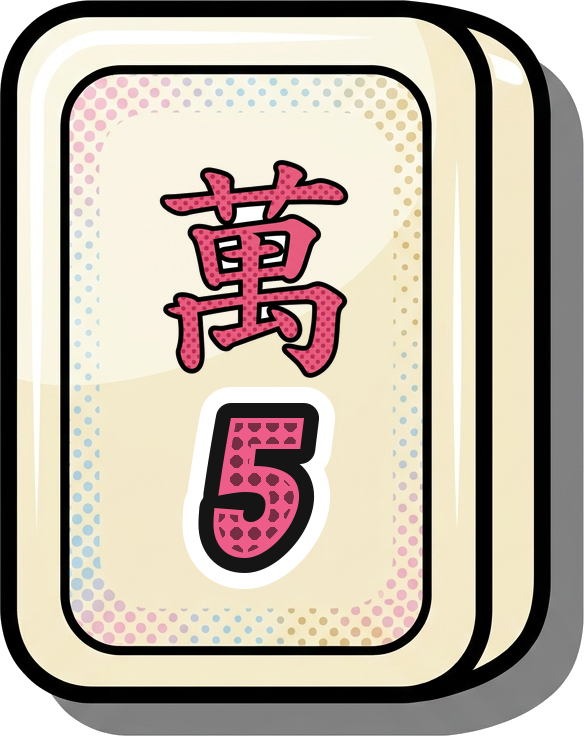
Completes on 3m or 6m — up to 8 tiles live.
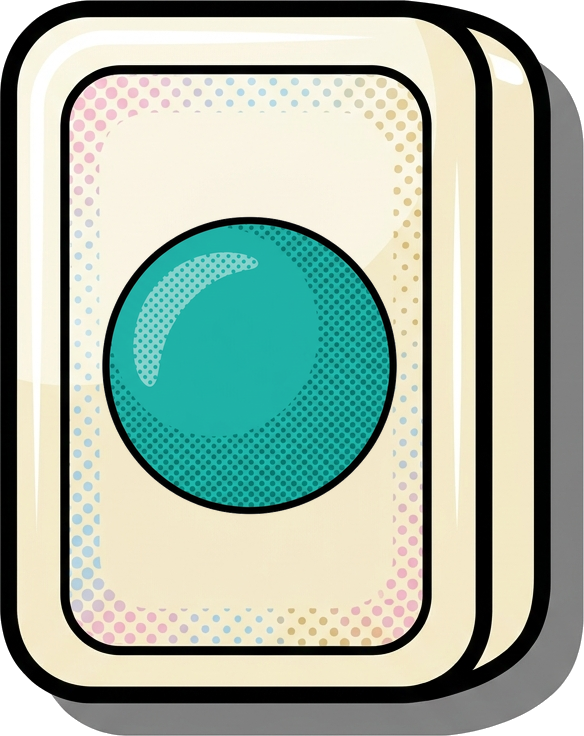
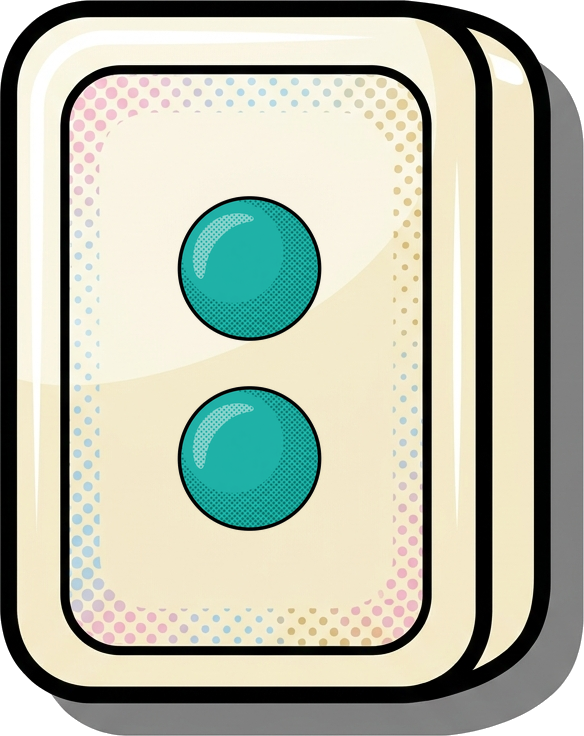
Completes only on 3p — 4 tiles at best.
Beginner · Specific to this sheetFlowers are free money — complete the set
On the club sheet a completed flower set pays immediately, straight across the table, whether or not you go on to win: a mixed set (one of each number 1–4) collects 5 from EACH player, a pure set (all four of one colour) collects 10 from each. Your flowers auto-set-aside and draw a replacement, so they never cost you tempo — but the set is a genuine points event. Flower draws are automatic; treat a completed set as a payment to record, rather than a tile choice you can force.
Intermediate · Specific to this sheetThe concealed gong pays here — declare it
The Classic Lab experiment found little separation between kong and no-kong policies. The Club sheet has a different incentive: declaring a concealed gong collects 5 from EACH player the instant you show it — 15 points banked before the hand is even decided — on top of its scored value. A safe fourth tile of your own pong is not a neutral draw here; it is a paid action. (Just remember the flip side: a concealed gong you fail to reveal at game end pays 10 to each player.)
Value vs the floor
Beginner · Specific to this sheetKnow your floor — and that a chicken hand is NOT a weapon here
The minimum to declare rises with the round: East 20, South 22, West 24, North 26. A win worth almost nothing is a Chicken Hand, floored to 20 (the app warns; some tables block it outright). This is the exact opposite of Classic, where a shapeless zero-value win is a real tactic — here it barely clears the minimum and is often illegal. Build a hand with genuine value: a flush, a pong hand, a couple of scoring pairs.
Intermediate · Specific to this sheetBank the table transfers — points that do not need a win
Because kong and flower bonuses settle straight across the table, a hand that never wins can still turn a profit: a pure flower set (10 from each = 30) plus a concealed gong (15) is 45 points banked with no mahjong at all. When you are folded out of the race, you are not out of the money — keep completing your paid events while you defend.
Advanced · Specific to this sheetThe ceilings are the big shapes — Nico Nico and the Orphans
On a flat-points sheet the top of the table is the special hand: Nico Nico (seven pairs) scores 50 — 75 with two undeclared gongs inside it — and 16 Orphans stacks its terminal bonuses on top. These are the hands that clear the North floor with room to spare and win a session. When a deal leans pairs, Nico Nico is a real target, not a curiosity.
Advanced · Specific to this sheetNever misdeclare — the false-mahjong fine is brutal
A false mahjong pays 25 to EACH player — you lose 75 in a single mistake, more than most winning hands make. Before you declare, be certain the hand is complete AND clears the round floor. On the club sheet the discipline of not declaring early is worth as much as any building tip: one false call can erase an evening.
Defensive play
Intermediate · Specific to this sheetDo not lead a chase on a live tile
The sheet fines chasing: if all four players discard the same suit tile in one round, the FIRST discarder pays 10 to each (an honor tile, 5 to each). When a tile has already been thrown twice and looks safe all round, being the fourth is fine — being the one who STARTED the round on it can cost you. Read the round before you lead with a fresh tile.
IntermediateA cheap ron still clears their floor — respect a ready opponent
The floor cuts both ways: an opponent who looks ready only needs a hand that clears their own round minimum, and the sheet's base plus a pong or two gets there easily. Do not assume a modest-looking hand is harmless — against exposed pongs in one suit, or exposed honors, defend as you would against any real hand.
AdvancedFolding still cannot save you from the self-draw
Perfect defence dodges only the discard win — a self-draw collects regardless of how safely you played. Against a big visible hand, safe discards are half the job; the other half is denying draws (claim tiles to break the rhythm) and, when you cannot win, banking your own transfer points while you shorten the hand toward the wall.
Reading the table
Intermediate · Specific to this sheetWatch the declarations, not just the discards
On this sheet players ANNOUNCE paid events — flower sets, concealed gongs. Each one tells you a seat is banking points and, often, how their hand is shaped (a concealed gong means three of a kind already down and a replacement drawn). Track who is quietly profiting from transfers even when nobody has won.
IntermediateTwo suits in someone's discards means the third is theirs
Repeated discards from two suits can suggest a flush in the third, which may help a Club hand reach its scoring floor. Treat that pattern as a clue. Exposed melds and the stage of the hand add evidence; the discards alone do not reveal an exact winning tile.
What the Lab found
These experiments compare specific habits under Taiwanese Club scoring. Open a finding for the result, the comparison and its limits.
How does the Club sheet change the value of a kong?
Kong play performed better on the Club sheet in this test. The sheet’s payments during the hand are an important difference from Classic.
Read the experimentAbout this guide
Choose this if your table follows the Hé Fēn club sheet. Its minimums and payments differ from Classic.
Scoring tradition and house variations
The Club sheet is the widely-played Hong Kong club-house codification (LRC lineage, rooted in Amy Lo's "Complete Book of Mah Jongg") — flat points, a rising round floor, and instant table transfers, with no 底+台 stakes. It ships built-in beside Taiwanese (Classic), which scores the standard 台 (tai) system. Same tiles, same shapes — a different way to keep score, so the tactics below are specific to how the CLUB sheet pays. Where the sheet's mid-game payments are house-optional, they live behind one switch in the ruleset settings.
The scoring reference and strategy are linked so you can check the values behind a suggestion. Lab results are identified separately from general playing advice.