The Game — Sixteen Tiles to Glory
You hold sixteen tiles and win with FIVE sets — chows (runs), pongs (triplets) or kongs (fours) — plus one pair, seventeen tiles at the moment of victory. All 144 tiles play, including the eight flowers. There is NO minimum to win. Any complete hand may declare — a hand worth zero tai (the famous "chicken hand", 屁胡) is a perfectly legal win and collects the base stake. Speed is never wasted here.
How the Money Moves — 底 + 台
Winning hands count 台 (tai), and the table agrees stakes before play: a base (底) plus a per-tai unit — 30/10 is the classic shape. Win off a discard and the DISCARDER alone pays base + tai×unit. Self-draw and ALL THREE players pay it — every tai is worth triple on a self-draw. The dealer plays for raised stakes both ways: one extra tai on every hand the dealer wins OR pays, plus two more per consecutive repeat (連莊 — repeat once and it's 3 extra on the dealer's hands, twice 5, and so on).
Everyday Tai — the Bread and Butter
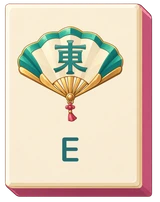
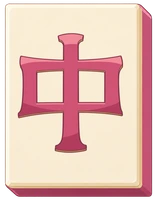
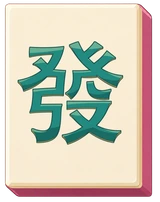
Self-draw (自摸) 1. Concealed hand (門清 — no chi, pon or open kong) 1. A concealed SELF-DRAW is 3 total — the classic 一摸三, and it collects from all three players. Single-possibility waits (獨聽) 1: the edge wait (1-2 needing 3), the closed wait (4-6 needing 5), or the lone-pair wait. A comfortable two-sided wait earns nothing. Round-wind pong 1. Seat-wind pong 1 — the same pong can earn both. Each dragon pong (中/發/白) 1.
Flowers — Seat Blooms and the Great Crossing
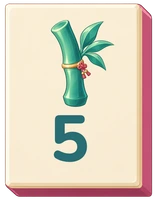
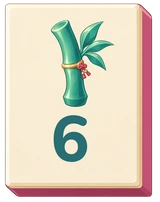
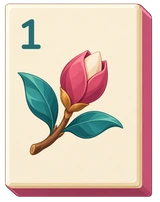
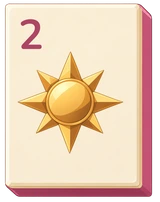
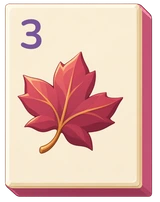
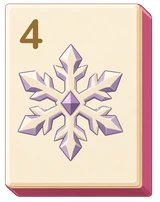
Flowers replace immediately from the wall's tail. Only YOUR seat's flowers score: 1 tai each, one per series (East seat: Spring and Plum; South: Summer and Orchid; West: Autumn and Chrysanthemum; North: Winter and Bamboo). A complete quartet — all four seasons, or all four plants — is the flower kong (花槓), 2 tai. Some tables price it 1; the switch is in the settings. All EIGHT flowers is 八仙過海, the Eight Immortals Crossing the Sea: an instant win counted as an 8-tai self-draw. Seven flowers lets you ROB the eighth (七搶一): the moment another player reveals it, you win instantly for 8 — and that player pays as the discarder.
Structure Hands — Shape Pays
All Sequences (平胡) 2: five chows, a simple pair, no flowers, no honors, a two-sided wait, won by discard. Strictly, a self-draw breaks it — the relaxed table is a settings switch. All Pongs (碰碰胡) 4: every set a pong or kong. Concealed pungs pay as a ladder: three 2, four 5, five 8 — each tier replaces the lower, and pungs completed by claiming don't count. All Claimed (全求) 2: every set claimed, one lone tile in hand, won off a discard — the lone-pair wait tai stacks on top. Half Flush (混一色) 4: one suit plus honors. Full Flush (清一色) 8: one suit only. All Honors (字一色) 16: winds and dragons only. Four Kongs (四槓牌) 8: complete four kongs single-handedly and the hand ends on the spot as your win — the dealer does not repeat.
Dragons and Winds — the Honor Courts
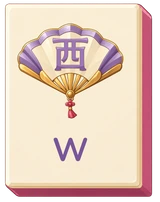
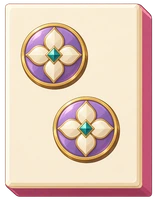
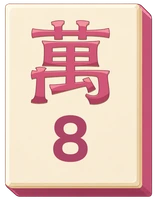
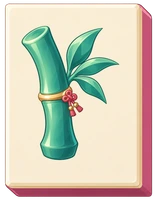
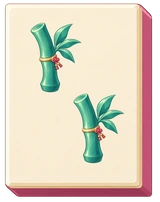
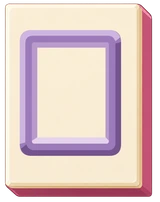
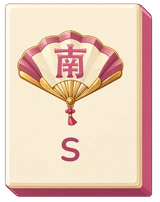
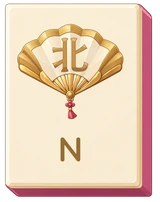
Little Three Dragons (小三元) 4: two dragon pongs plus the third as the pair — the per-pong dragon tai fold in, not on top. Big Three Dragons (大三元) 8: pongs of all three dragons, likewise all-in. Little Four Winds (小四喜) 8: three wind pongs plus the fourth as the pair — and your round/seat wind tai STILL count on top. Big Four Winds (大四喜) 16: pongs of all four winds, wind tai folded in.
Timing Tai — When the Tile Arrives Matters
Heavenly Hand (天胡) 24: the dealer wins with the dealt hand. Earthly Hand (地胡) 16: a non-dealer wins in the first go-around — on the dealer's very first discard, or their own first draw. Some tables price the discard case at 8 as 人胡; that's a settings switch. Last wall tile, self-drawn (海底撈月) 1 — the self-draw tai stacks. Last discard of the hand (河底撈魚) 1. Kong replacement win (槓上開花) 1, plus the self-draw. Robbing a kong (搶槓) 1: the tile being promoted to a kong is your winning tile.
Calling It — 天聽 and 地聽
Announce ready by the time the dealer plays the first tile and you've declared Heavenly Ready (天聽) — worth 16 if this hand wins. Announce within your first two draws, before ANYONE has claimed a chi, pon or kong, and it's Earthly Ready (地聽, the "咪機"), worth 8. Both declarations LOCK the hand: you draw and discard what you drew, you may not rearrange, and you may not pass on a winning tile. The tai only counts if the declared hand actually wins.
Worked Example — Reading a Score
South seat, East round, dealer on their second repeat wins by SELF-DRAW: concealed self-draw 3, seat flower 1, dragon pong 1, dealer 1, repeats 4 — 10 tai. At 30/10 stakes every player pays 底30 + 10×10 = 130. Had the same hand won off a discard as a plain concealed hand, it would count 門清 1 instead of 3 and collect from one player only — the self-draw truly is the game's biggest lever.
Sources & scope
This reference describes the rules implemented in Hé Fēn; an event’s own rulebook takes precedence at that event. Reference links checked 13 September 2026. We are not affiliated with these organisations.
- Taiwanese Classic in Hé Fēn Hé Fēn Mahjong. The Taiwanese Classic scoring table used in Hé Fēn, with options for table variations.