
Tile efficiency
Building speed — you need five sets, so shape quality compounds
Prioritise multi-sided waits
BEGINNERFavour shapes that complete from multiple draws. A two-sided sequence (4-5 waiting on 3 or 6) can be finished by up to 8 tiles; an edge wait (1-2 waiting on 3) by at most 4. Visible tiles and the rest of your hand can reduce the useful copies. Compare live improvements instead of counting shape alone.
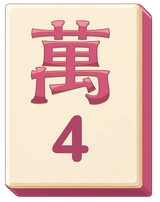
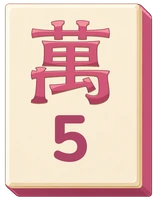
Completes on 3m or 6m — up to 8 tiles live.

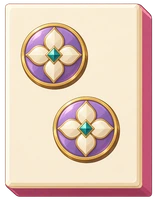
Completes only on 3p — 4 tiles at best.
Clear isolated terminals and unpaired honors in the first few turns
BEGINNERA lone 1, 9, wind or dragon builds almost nothing: honors only ever become pongs, and terminals join only one sequence (1-2-3 or 7-8-9). Discard them early — they are also the safest tiles you will ever release, because nobody's hand is ready yet. The exception: hold your seat wind and the round wind an extra beat — their pong is a tai.
Never break a two-sided shape to keep a pair you don't need
INTERMEDIATEYou need exactly one pair. With two or three pair candidates, count them: every pair beyond the second is two tiles doing half a job each. Break the extra pairs toward sequences — or, if pairs keep arriving, commit the other way and hunt 碰碰胡: All Pongs is 4 tai, and three concealed pongs add 2 more.
Value vs speed
No minimum — every complete hand is legal, so the question is always price, never permission
A chicken hand is a real weapon — win ugly when the table is dangerous
BEGINNERThere is no floor: a hand worth zero tai (屁胡) still declares and still collects the base stake from the discarder. Early in a hand, or when an opponent's exposures look expensive, the fastest shapeless win is a perfectly sound play — it banks the base, ends their build, and passes the deal. Speed is never wasted here the way it is under minimum-score rules.
The self-draw triples everything — protect it near the end
INTERMEDIATEWinning off a discard collects base + tai from ONE player; a self-draw collects that amount from ALL THREE. And a concealed self-draw (門清自摸) is 3 tai by itself. A modest concealed hand that self-draws routinely outearns a flashier hand won by discard — so once you are ready and concealed, think twice before claiming a tile that merely arrives one turn sooner: the claim breaks concealment, downgrades 3 tai to 1, and cuts your collection from three payers to one.
- ✓You are ready and fully concealed — let the wall pay you
- ✓Claiming would only advance a chow, not complete a tai pattern
- ✗NOT when an opponent looks one tile from winning — then tempo beats price
平胡 pays 2 — but only won by discard, with an open two-sided wait
INTERMEDIATEAll Sequences is the everyday 2-tai hand: five chows, a simple pair, no flowers, no honors, a two-sided wait, won off a discard. Strictly, a self-draw BREAKS it (the self-draw tai arrives instead) — some tables relax that, and the switch is in the settings. Know which way your table plays before you shape the ending: on the strict reading, a 平胡 hand actually prefers the ron.
A tight wait is a paid wait — reshape the ending when it costs nothing
ADVANCEDThe single-possibility waits — edge (1-2 needing 3), closed (4-6 needing 5), lone pair — each pay 1 tai; the comfortable two-sided wait pays nothing. When a late draw lets you choose the shape of your final wait at no loss of live tiles, take the paying one. When the choice costs real outs, take the wide wait: one extra tai is worth about one unit per payer, and an unwon hand is worth nothing.
The ready declarations are timed bets — 天聽 16, 地聽 8, and a locked hand
ADVANCEDTwo of the biggest tai in the game are DECLARATIONS, not tile patterns. Ready before your first discard is 天聽 (16 tai); ready within your first two discards, with no claims anywhere at the table, is 地聽 (8) — and both windows slam shut the moment anyone calls. The price: your hand LOCKS. You discard every draw untouched and can claim nothing but the win, so a declared wait you chose badly stays badly chosen forever. Declare on a wide, live wait and it is the best bet on the table; declare on a lone edge wait and you have volunteered to skip your own turns. One more instant win worth knowing exists: a single player completing FOUR kongs ends the hand on the spot (四槓牌, 8 tai — and no self-draw tai on top), and seven flowers let you rob the eighth (七搶一, 8).
Stack the pong ladder deliberately
ADVANCEDThe structure tai compound: All Pongs 4, three concealed pongs 2, four concealed pongs 5, five 8 — and a half flush adds 4, full flush 8. A pong-heavy deal in one suit is the classic big-hand route: 碰碰胡 + 混一色 + a wind or dragon pong reaches 9+ tai before the win-context tai even land. Commit early, claim pongs freely (concealed-pong tiers only count what you did NOT claim), and keep the pair simple.
Defensive play
You can only dodge the ron — so deny the draw
Fold when two exposed melds tell one story and you are far from ready
INTERMEDIATETwo or more exposed pongs in one suit, or exposed wind/dragon pongs, mean a hand that will hurt. If you are still four or more tiles from ready, stop building: your remaining draws are unlikely to win the race, and every loose discard risks paying base + their whole tai count alone.
Treat past discards as clues, not guarantees
INTERMEDIATEAn opponent’s past discards can help you read their choices, but their hand may have changed. They do not make a tile automatically safe in Taiwanese play. Three visible copies of a suited tile do not rule out the fourth completing a sequence. Consider the exposed sets, remaining copies and scoring possibilities together.
Remember what folding can and cannot save
ADVANCEDPerfect defence dodges only the discard win: a self-draw collects from all three of you no matter how safely you played. So against a big visible hand, safe discards are half the job — the other half is denying draws: claim tiles you would otherwise pass to break their turn rhythm, and shorten the hand toward the wall when you cannot win it.
Deny a streaking dealer, even at a cost
ADVANCEDA dealer who wins deals again, and every repeat adds 2 tai (連莊) to all their future wins — the dealer plays for raised stakes both ways, paying extra when they lose. Two things follow: break the streak even with a cheap win, and when you ARE ready, prefer the wait the dealer is likely to feed — a win off the dealer collects their raised leg.
Reading the table
Discards and exposures are public information — use them
Early middle-tile discards signal a special hand
INTERMEDIATEA player throwing 4s, 5s and 6s in the opening turns is not building ordinary sequences — expect a one-suit hand, a pong hand, or terminals. Watch which suit they are NOT discarding: that is the suit to stop feeding.
Two discarded suits can hint at a flush
INTERMEDIATERepeated dot and character discards, with few bamboo discards, may suggest a bamboo flush. Look for supporting evidence in exposed sets and later discards. The pattern is a clue to possible danger, not a complete picture of the hand.
Advice and evidence
A strategic suggestion depends on your hand, opponents and scoring sheet. Older simulation summaries do not establish an optimal action. Our latest matched-deal batch reports uncertainty and includes inconclusive results.
Compare strategy across rulesets →
The same shape can lead to a different decision under a different scoring system.