Value vs speed
Three faan or nothing — plan the route first
Pick a 3-faan route at the deal, or plan to play safe
BEGINNERThe reliable routes: a one-suit lean (mixed one-suit with honors, pure one-suit for a jackpot), all pongs, or a dragon/seat-wind pong plus the situational bonuses. Six or more tiles of one suit at the deal is a committed suit hand — start discarding your shortest suit immediately. No route at all? Your plan this hand is cheap discards and no payouts.
Consider the value of a dragon or wind pung
BEGINNERA pong of a dragon, your seat wind or the round wind is a guaranteed faan that survives opening your hand. It converts "find three faan" into "find two" — a useful value route, but still a choice to weigh against your shape, flexibility and the danger of the table.

A dead hand can still win: stay concealed and self-draw, and you reach 3 faan with no pattern at all
ADVANCEDA patternless hand still has one legal win: no flowers (1) + self-pick (1) + winning from the wall with a concealed hand (1) is exactly the 3-faan floor. The conditions are strict — claim nothing, draw no flower, win only by self-draw — but it converts a dead hand into a live one at zero cost. One pung call closes the exit permanently.
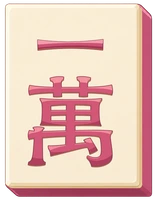
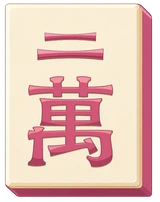

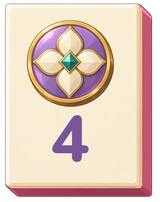
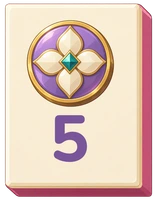
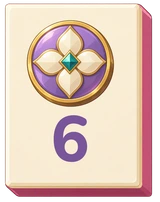
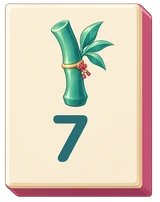
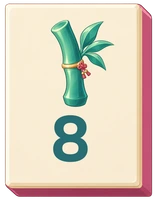
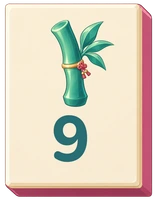
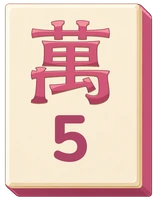
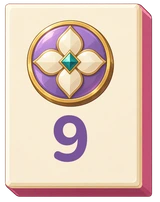
No route, no honors — and still winnable if it stays concealed and flowerless.
- ✓No pattern route by the eighth discard
- ✓Zero flowers drawn
- ✓You have claimed nothing
- ✓Your winning tile has unseen copies left
Near ready and concealed? Refuse the tempting claim
INTERMEDIATEA self-draw win collects from all three opponents, and the self-pick + concealed faan may be the very points that clear your floor. Claiming a discard to get there one turn sooner can strip both — same tiles, smaller and sometimes illegal win.
Defensive play
Doubling makes deal-ins the biggest number in your session
Discard outside-in: terminals, then honors, then edges, middles last
BEGINNERMiddle tiles (4-5-6) connect to the most shapes — yours and everyone else's. Spend terminals and clocked-out honors while hands are shapeless; a middle tile hoarded to turn twelve is released at maximum danger, straight into ready hands.
Reassess your risk against exposed melds
INTERMEDIATECompare the value and distance of your own hand with the danger of a discard. In Hong Kong play, an opponent’s previous discard does not create Riichi-style furiten protection. Three visible copies also do not rule out that tile completing a sequence. Use the exposed sets, visible tiles and scoring context to judge relative risk; do not label a tile absolutely safe from those signals alone.
Count copies before you settle a wait
INTERMEDIATEBefore fixing your final wait, count that tile's visible copies across discards and exposed melds. Two gone means your wait is half dead; three gone means it is a decoration. Reshape toward a live wait even at the cost of a turn.
Reading the table
Exposures are a price list — read them before you pay
Honors in someone's melds mean honors in their plan
INTERMEDIATEA player who has ponged one dragon wants the others, and a wind pong signals a value build. Feeding a second honor to an honor-collector is how small mistakes become doubled catastrophes — hold honors late against them or spend them first-turn early.
A claimed chow tells you the suit story
INTERMEDIATESomeone claiming chows in bamboo while bamboo is missing from their discards is leaning that suit. That may make bamboo and honours worth extra caution, but it does not prove that other tiles are safe. Compare the calls with the rest of the visible hand.
Tile efficiency
The same shape rules apply — with 13 tiles they bite faster
Compare the tiles that complete each wait
BEGINNERThe 4-5 shape completing on 3 or 6 (up to 8 tiles) beats the 1-2 shape completing only on 3 (at most 4). With just four sets to build, one bad shape can be the whole difference between ready and drawn.
Advice and evidence
A strategic suggestion depends on your hand, opponents and scoring sheet. Older simulation summaries do not establish an optimal action. Our latest matched-deal batch reports uncertainty and includes inconclusive results.
Compare strategy across rulesets →
The same shape can lead to a different decision under a different scoring system.